
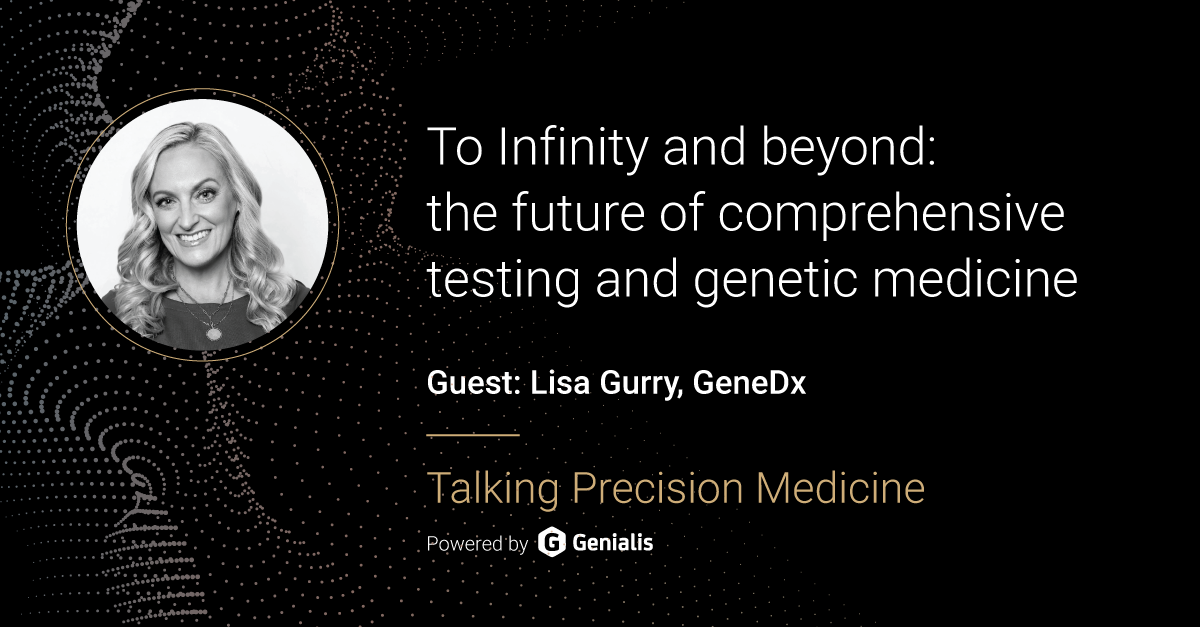
Welcome to Talking Precision Medicine (TPM podcast) — the podcast in which we discuss the future of healthcare and health technology, and how advances in data and data science are fueling the next industrial revolution.
In this episode, Rafael Rosengarten sits down with Lisa Gurry, Chief Business Officer at GeneDx, to discuss the transformative role of genomic testing in rare disease diagnosis, therapeutic discovery, and precision medicine. Lisa shares GeneDx’s mission to shorten the diagnostic odyssey for patients and families, explains how genomic data is accelerating drug development, and reflects on her deeply personal experience raising a daughter with a rare disease. Together, they explore how advances in sequencing, AI, and data integration are creating new possibilities for patients, clinicians, and biopharma alike.
Come on in and have a listen.
Links:
Episode highlights:
Why rare disease is not as rare as it sounds
- Many conditions categorized as rare collectively affect 400 million people worldwide, making rare disease a much larger healthcare challenge than most people realize.
- Large numbers of patients remain undiagnosed or misdiagnosed because they never receive comprehensive genomic testing that can uncover the root cause of their symptoms.
- Better visibility into patient populations could help researchers, advocates, and drug developers identify unmet needs and bring therapies to more people.
“Rare actually isn’t that rare in many cases.”
A mother’s journey through thirteen years of uncertainty
- Lisa shares the personal story that ultimately connected her family’s experience with her work at GeneDx.
- Years of therapies, specialist visits, seizures, and repeated testing followed before a definitive diagnosis finally arrived when she was thirteen.
- The experience transformed uncertainty into understanding, helping the family make sense of challenges that had previously seemed disconnected.
“It was wild to me that with all the excellent medical care we had received, we weren’t getting that diagnosis till she was thirteen.”
How better interpretation changes lives
- The same genetic sample was analyzed multiple times over more than a decade, yet only the final test produced a clear answer.
- Progress in scientific understanding, variant interpretation, and data sharing made it possible to recognize a condition that had previously gone undetected.
- Every new diagnosis contributes to a growing body of knowledge that can help future patients reach answers more quickly.
“That interpretation platform gets so much stronger and the opportunity to get more people a diagnosis becomes so much more valuable.”
Building the world’s largest rare disease data asset
- More than one million sequenced genomes and exomes have created a powerful foundation for learning across rare disease populations.
- Combining genomic and phenotypic information allows researchers to uncover patterns that would be difficult to identify in smaller datasets.
- Advances in AI are helping accelerate discovery, creating a feedback loop where every new test strengthens future diagnoses.
“Each of those tests represents an answer that we can deliver back to a family that is really hungry for clarity.”
Accelerating rare disease drug development
- Finding the right patients remains one of the biggest challenges in rare disease research and clinical development.
- Sponsored testing programs and collaborations with advocacy groups can help connect patients with emerging therapeutic opportunities.
- Starting drug discovery with genomics may improve success rates by identifying the biological drivers of disease much earlier in development.
“There’s no reason why ninety percent of drugs should fail if we start with genomics at the core.”
Expanding access through clinicians and communities
- Access to genomic testing depends not only on reimbursement but also on awareness among clinicians and families.
- General pediatricians can play an important role in identifying children who may benefit from testing, particularly in regions with limited access to genetic specialists.
- Counseling and support services help families understand results and navigate next steps after receiving a diagnosis.
“We absolutely want to make the testing available to every child.”
The future of precision medicine starts with a genome
- Falling sequencing costs and stronger interpretation capabilities are making genomic testing increasingly practical at scale.
- A future where genomic information becomes a routine part of healthcare could shift medicine from reactive treatment toward prevention and personalization.
- For families facing a diagnostic odyssey, seeking answers early and advocating for comprehensive testing can make a meaningful difference.
“A genomic test should be as standard as taking your blood pressure.”
This has been Talking Precision Medicine. Please subscribe and share our podcast with your colleagues, leave a comment or review, and stay tuned for the next episode. Until then you can explore our TPM podcast archive and listen to interesting guests from our past conversations.